What makes a job 😘 not 💩.
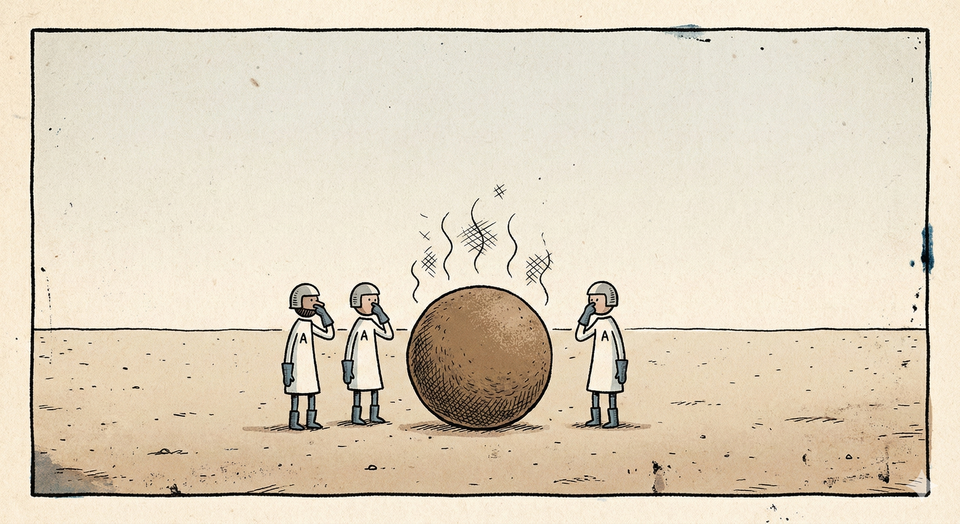
In 2017 I pitched an AI bot that would use David Graeber's 'bullshit jobs' book to determine good and bad.
I was lucky enough to meet the late David Graeber at an RSA event in London (a different world before Covid). His book, Bullshit Jobs: A Theory was on my shelf having already read it twice. It puts words to a feeling that millions of people experience every day: the quiet, soul-crushing suspicion that their job is pointless.
I managed to grab a minute with him from the crowded room: "David - what if we build AI to scan job titles and descriptions and create a 'bullshit meter'?" - this was pre-ChatGPT and also I also knew nothing about AI. The conversation was brief, but the idea stuck with me. He was interested, I couldn't get a data scientist to take interest and it evaporated.
Since his passing it had always felt like a project that captured a no-nonsence spirit: using a playful, provocative tool to expose a profound truth about work. While David is no longer with us, the thought experiment of building that "Bullshit Meter" feels like an AI tribute. Here’s how it might be done.
The Philosophy: What Is a Bullshit Job?

First, you can't build a bullshit meter without a rock-solid definition of bullshit. This is Graeber's genius. He wasn't just complaining about bad jobs; he created a rigorous taxonomy of meaninglessness work.
A bullshit job, according to Graeber, is a form of paid employment that is so completely pointless, unnecessary, or pernicious that even the employee cannot justify its existence, though they feel obliged to pretend this is not the case.
Crucially, this is different from a shit job. A cleaner, a garbage collector, or a care worker has a shit job... it’s often physically demanding, underpaid, and disrespected. But it is noble and useful. Society would collapse without it. A bullshit job, in contrast, could disappear entirely with no negative consequences.
"It is a void dressed in a business suit"
To build our AI, we would need to teach the model to spot the five families of bullshit jobs Graeber identified:
- Flunkies: These jobs exist only to make someone else look or feel important. Think of a doorman who could be replaced by a buzzer, or a personal assistant whose primary role is to flatter an executive's ego.
- Goons: These jobs have an aggressive or deceptive element and exist only because other people employ them. The classic examples are corporate lawyers, lobbyists, telemarketers, and PR specialists whose job is to convince you of something you don't need or believe.
- Duct Tapers: These jobs exist only to solve a problem that shouldn't exist in the first place. They are the human patches for a broken system. Think of the programmer whose entire job is fixing sloppy code from a legacy platform, or the airline employee whose role is to appease passengers whose bags have been lost by an incompetent system.
- Box Tickers: These jobs involve creating reports, filling out forms, or running workshops that exist solely to allow an organization to claim it's doing something that, in fact, it is not. It's the performance of work, not the substance of it. Think of the corporate compliance officer whose detailed reports are never read, or the surveyor who creates colourful charts for meetings that result in no action.
- Taskmasters: These are the managers of people who don't need managing. They exist to create more bullshit for others. A middle manager who invents new administrative tasks or a "strategic leader" who assigns work to people who are perfectly capable of managing themselves fall into this category.
With this philosophical framework, we have the building blocks for our AI.
Building the "Bullshit Meter": How the AI Would Work

An AI model doesn't understand "pointlessness." It understands patterns in data. The task, then, is to translate Graeber's five categories into linguistic signals that a machine can detect in a job description.
Step 1: The Data
The AI would need to be trained on a massive dataset of job descriptions—tens of thousands of them. The crucial step would be labeling this data. We could build a simple web tool and ask people to anonymously submit their own job description and tag it based on their lived experience: "Is this job useful? If not, which of Graeber's categories does it fall into?" This would create a rich, human-verified dataset to train the model.
Step 2: The "Bullshit Signals"
This is where the magic happens. We would train the model to hunt for specific linguistic patterns—the tell-tale signs of corporate cant and semantic emptiness.
- Vague & Euphemistic Verbs: The AI would learn that productive jobs use concrete verbs: build, fix, teach, care, design, grow, repair. Bullshit jobs hide behind a smokescreen of abstract verbs: leverage, synergize, facilitate, optimize, interface, coordinate, drive. A job description heavy on these words is a major red flag, often pointing to a Box Ticker or Taskmaster.
- Semantic Density: The model would analyze the ratio of jargon to substance. Phrases like "driving strategic alignment across key business verticals" or "facilitating outcome-oriented stakeholder ideation sessions" are semantically hollow. The AI would score these high on the bullshit meter.
- Relational vs. Productive Language: The AI would differentiate between work that creates something new and work that is about managing the process of work. A Flunky's job description might be filled with phrases like "acting as the first point of contact," "managing the director's schedule," or "ensuring a seamless guest experience"all tasks that service someone else's importance.
- The Goon Signal: Goon jobs often contain subtly aggressive or adversarial language. The AI could be trained to spot phrases like "defending market share," "mitigating competitive threats," "shaping the public narrative," or "managing regulatory risk." This is the language of conflict, not creation.
- The Duct Taper Signal: To spot Duct Tapers, the AI would search for language related to fixing internal, self-inflicted problems. Keywords would include "process remediation," "managing legacy systems," "ensuring data integrity between platforms," or "troubleshooting workflow inefficiencies." These phrases often signal a job that exists only because the underlying system is broken.
Step 3: The Output
The "Bullshit Meter" wouldn't just spit out a single score. To be truly useful and Graeber-esque, it would provide a detailed diagnosis. You'd paste in a job description and get a result like this:
Job Title: Senior Strategic Initiatives Facilitator
Bullshit Score: 88%
Probable Category Breakdown:Box Ticker: 65% (High prevalence of report-generating and compliance language)Taskmaster: 20% (Focus on overseeing processes rather than people or products)Duct Taper: 10% (Mentions 'remedying cross-departmental communication gaps')Flunky: 5% (Language of 'supporting senior leadership')Goon: 0%
What's the Point? Beyond a Cynical Joke
A tool like this is more than just a party trick. It would be a tool for consciousness-raising.
For Individuals: Imagine being a recent graduate navigating the job market. You could use the Bullshit Meter as a guide to avoid falling into a spiritually empty career. It could help you distinguish between a job with real purpose and one that’s just a collection of fashionable buzzwords.
For Organizations: A truly brave CEO could run their entire org chart through the meter. Where is the organizational cholesterol building up? Which roles are just patching over deep structural flaws? It could be a powerful, if painful, diagnostic tool to prompt genuine, productive reorganization.
For Society: By making the problem visible and quantifiable, the Bullshit Meter could fuel the vital conversation Graeber started. It would provide data to answer the big questions: Why do we, as a society, reward so many pointless jobs while undervaluing essential ones? How much human potential is being wasted in cubicles, performing tasks that even the performers know are meaningless?
The point of the Bullshit Meter isn't to be perfectly accurate. It's to hold up a mirror. It uses the cold logic of an algorithm to expose the profound irrationality of our modern economy, continuing the work of a man who dared to suggest that we all deserve better than bullshit.